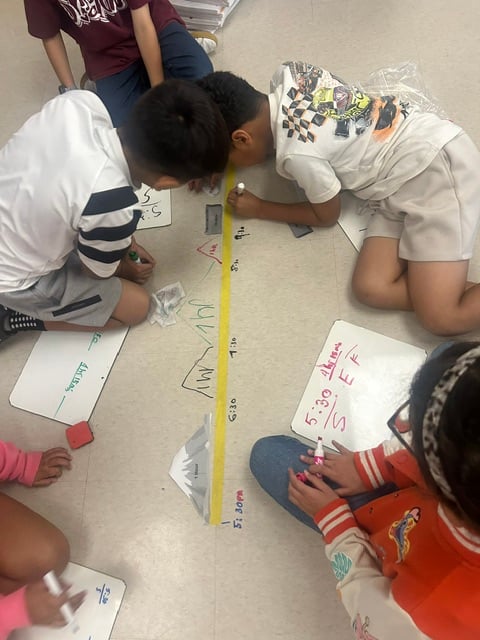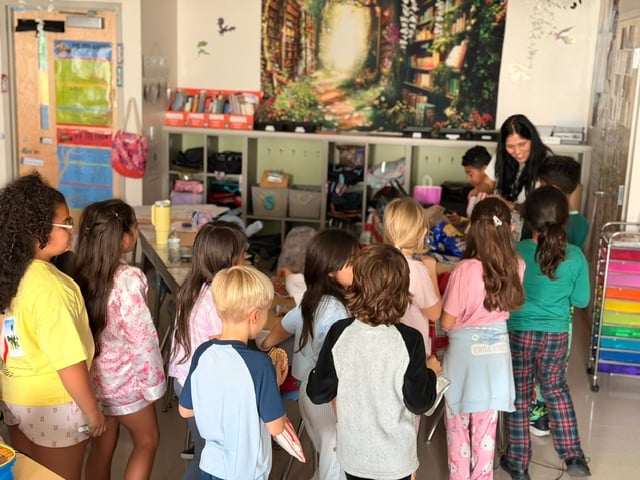
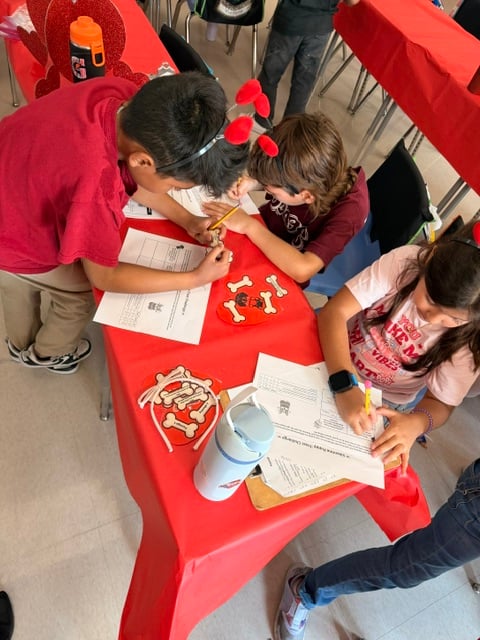
“Take your child out of public school now.” I heard this business leader state emphatically from behind his desk via a prerecorded video. Suddenly, I felt awkward for being a public school teacher, a mother of children who attended public schools, and a business owner who was at a parent resource convention. Should I feel embarrassed that I serve children primarily in a public school setting? What about the millions of families who need the public school system for a variety of reasons? What about single-parent homes that depend on this system to be able to work and provide?
Families have every right to choose how to educate their children, but not at the cost of disparaging other forms of education that currently serve millions of Florida children and that have shown increased success due to the hard work of dedicated leadership and staff.
The state of Florida has opened the doors wide for families to choose how to educate their children. The latest projections show that while public school enrollment rates continue to drop, enrollment in alternative programs such as charter schools, private schools, and homeschooling has soared (FlaglerLive, 2026). This has been made possible through the “Family Empowerment” program. This program also allows families to choose which school their child attends, as opposed to mandating that a family enroll their child at the school they are zoned for based on the location of their primary residence.
Through this same program, families can receive, on average, $8,000 to fund alternative education (EdChoice, 2025). While this is a win for parent choice, the effect it is having on public school resourcing is devastating. At the end of the day, this will have a negative impact on the millions of families that need support through the public school system, and ultimately on the millions of children who need and benefit from this form of education.
Although critics argue that public schools are not providing many students with what they need to succeed in reading, the data tells a different story. Florida public schools continued to show growth in reading data during the 2025–2026 school year. The National Assessment of Educational Progress (NAEP) reports that, nationwide, reading scores for 9-year-olds increased in 2025 when compared to 2022 (National Center for Education Statistics [NCES], 2025). In the state of Florida, “61% of students in grades 3–10 scored on or above grade level on the end-of-year ELA progress monitoring assessment, an increase of 4 percentage points from [2024]” (Florida Department of Education, 2026).
It is also important to note that this growth occurred while districts across Central Florida were simultaneously dealing with declining enrollment and the resulting financial consequences. In Orange County, enrollment declined by 6,627 students during the 2025–26 school year, contributing to the closure of seven schools for the 2026–27 school year. OCPS has attributed its enrollment decline to several factors, including declining birth rates, immigration policy, aging neighborhoods, and taxpayer-funded vouchers for private schools (Spectrum News 13, 2026).
As Randolyn Freiberger, a former Teacher of the Year who has worked in public education for over 29 years in a variety of roles, states regarding what every public student requires to succeed:
“It’s critical for our state to ensure our public schools are well funded, accessible, and prepared to offer a high-quality education to each and every child that passes through the doors, especially since not all families can have their child attend private school or homeschool for logistical reasons” (R. Freiberger, personal communication, September 15, 2026).
As I researched for this article, I was not shocked to learn that while Florida is now providing more opportunities for families who homeschool, attend private schools, and attend charter schools, they are taking away opportunities for public school families to receive a fair and effective education.
Although the Florida Chamber of Commerce announced that Florida is the 14th strongest economy in the world (Florida Chamber Foundation, 2026), we are 50th in rank for public school teacher pay and 46th in student-to-teacher ratio (Florida Education Association, 2025). Furthermore, they suggest that these dire numbers are the result of “systemic issues, symptoms of policy that favors profit over the needs of students” (Florida Education Association, 2025).
Teachers are on the front line of executing effective instruction for millions of Florida children each day. Yet currently, many school districts across the state have had to propose major out-of-pocket increases to teacher medical benefits while not being able to offer pay raises. This has resulted in educators facing the need to obtain multiple jobs.
According to the Walton Family Foundation (2026), 71% of U.S. teachers hold at least one second job. This places an additional strain on educators, and instead of educators focusing on the vital task of developing successful readers and learners, their focus is on how they will provide for their families. At the end of the day, the question remains the same: What about the students?
Let me be clear: I am not advocating against school choice. You do you, boo (as my daughter likes to say). I do not advocate for one educational system over another. I advocate for a who.
The 2.7 million whos who represent approximately 1.5 million Florida households depend on the public school system and need it to operate effectively for the success of their children. Not all families can enroll their children in alternative educational programs outside of public school for a variety of reasons. As Dahlia Oliphant, a former Teacher of the Year, shared with me:
“I have been a teacher for over 29 years. I’m a single mom, and I have a son who requires additional supports. There is no way I can homeschool my kids” (D. Oliphant, personal communication, September 1, 2026).
Her experience is a reminder that educational choices are not equally accessible to every family. For many parents, public schools are not simply one option among many; they are an essential part of how they provide their children with an education while also meeting the demands of work, family, and life.
Should Florida be “favor(ing) exclusionary practices” (Florida Department of Education, 2025) when it comes to claiming parent choice but then undermining the quality of public schooling?
All forms of education should be adequately supported because, at the end of the day, education is not about empowering an ideology, but about equipping and empowering our kids, the next generation of Florida leaders.
© 2026 Jineth Sanchez. All rights reserved.